The ICC T20 World Cup winners list spans ten editions, and no two finals have looked the same. A last-ball bowl-out in 2007, four consecutive sixes off the final over in 2016, a 7-run finish in 2024, and a 96-run demolition in 2026.
The format has produced an 8-wicket chase completed with more than an over to spare, a first-ever title defense, and a team bowling the opposition out for 39. One bowler took 5/6. One batter hit six sixes in a single over. The margin between winning and losing has ranged from 5 runs to 96.
That is what makes this tournament different from everything else in cricket.
Full T20 World Cup Winners List (2007–2026)
| Year | Host | Winner | Runner-Up | Final Result |
|---|---|---|---|---|
| 2007 | South Africa | India | Pakistan | India won by 5 runs |
| 2009 | England | Pakistan | Sri Lanka | Pakistan won by 8 wickets |
| 2010 | West Indies | England | Australia | England won by 7 wickets |
| 2012 | Sri Lanka | West Indies | Sri Lanka | West Indies won by 36 runs |
| 2014 | Bangladesh | Sri Lanka | India | Sri Lanka won by 6 wickets |
| 2016 | India | West Indies | England | West Indies won by 4 wickets |
| 2021 | UAE and Oman | Australia | New Zealand | Australia won by 8 wickets |
| 2022 | Australia | England | Pakistan | England won by 5 wickets |
| 2024 | USA and West Indies | India | South Africa | India won by 7 runs |
| 2026 | India and Sri Lanka | India | New Zealand | India won by 96 runs |
India (2026)
India made history in 2026 by becoming the first team to defend the T20 World Cup title, winning under captain Suryakumar Yadav and coach Gautam Gambhir.
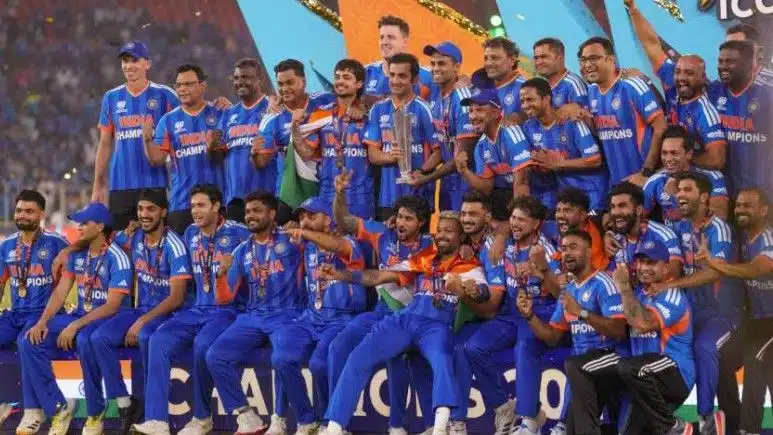
Sanju Samson was Player of the Tournament with 321 runs at 80.25 average, scoring 89 each against England in the semi-final and New Zealand in the final.
Ishan Kishan hit 77 off 40 against Pakistan and 54 off 25 in the final, Abhishek Sharma hit 52 off 21 in the final, Shivam Dube rescued India with 66 off 31 against Netherlands and closed the final with 26* off 8 balls finishing with 235 runs at 169.06 strike rate and 5 wickets, and Hardik Pandya contributed 217 runs and 9 wickets across the campaign.
Bumrah took 4/15 in the final and finished with 14 wickets at 12.42, matching Varun Chakravarthy. Axar Patel took 11 wickets, including 3/27 in the final, and Arshdeep Singh ended his T20 World Cup career on 35 wickets, passing Bumrah’s record of 33.
India posted 255/5 and beat New Zealand by 96 runs, the biggest winning margin in T20 World Cup final history.
India (2024)
India went through the entire 2024 T20 World Cup without losing a single game and won the tournament. In the final in Barbados, they posted 176/7 and restricted South Africa to 169/8. South Africa needed 30 off the last two overs but fell 7 runs short.
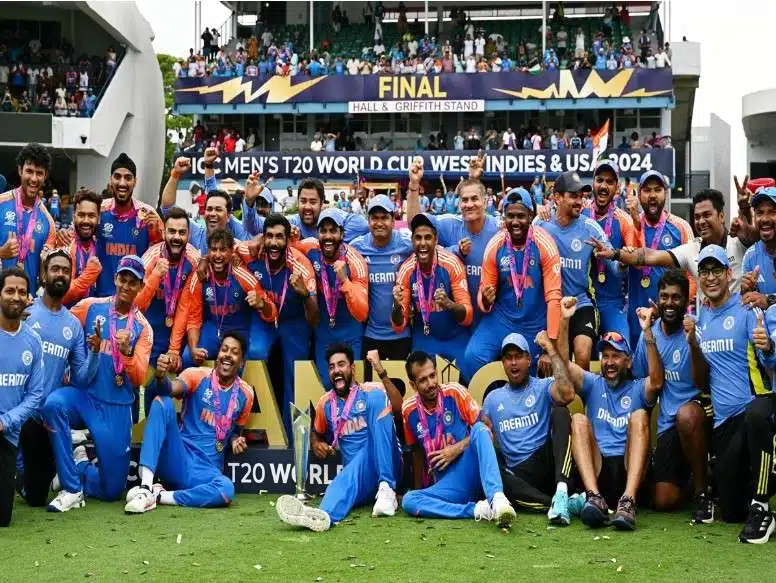
Virat Kohli scored 76 in the final and was named Player of the Final. Jasprit Bumrah was named Player of the Tournament for his consistent bowling across the whole event.
The title was built on Kohli’s crucial knock in the final and Bumrah’s pressure bowling throughout the competition.
England (2022)
No team had ever held the ODI and T20 World Cups at the same time. England changed that in Melbourne, beating Pakistan in the final to become the first team in history to hold both titles simultaneously.
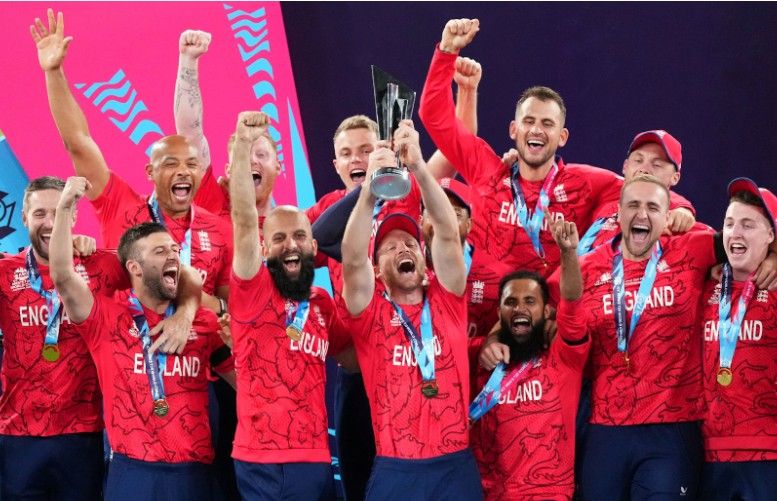
Pakistan were restricted to 137/8 in the final. England chased 138/5 in 19 overs with Ben Stokes making 52* off 49 balls. They had recovered from a shock group stage loss to Ireland and won every match after that.
Sam Curran took 3/12 in the final and finished the tournament with 13 wickets at an average of 11.38 and an economy of 6.52, winning both Player of the Match and Player of the Tournament.
England reached the final by beating India by 10 wickets in the semi-final, where Jos Buttler scored 80* and Alex Hales made 86* to chase 169 in just 16 overs.
Australia (2021)
Australia had never won a T20 World Cup before Dubai 2021. New Zealand posted 172/4 in the final, but Australia chased 173/2 in 18.5 overs to claim their first title with more than an over to spare.
Their only loss in the whole tournament came at the hands of England in the Super 12 stage. They beat Pakistan in the semi-finals, then beat New Zealand in the final.
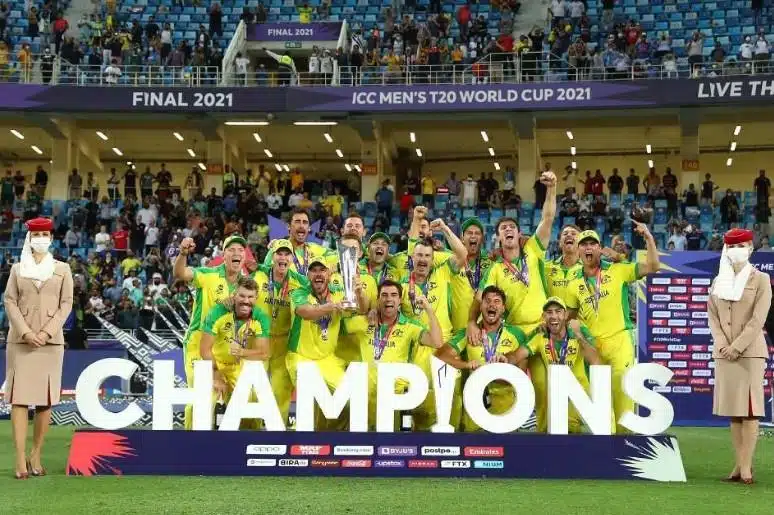
Mitchell Marsh scored 77* off 50 balls in the final, reaching his fifty in just 31 deliveries, and Josh Hazlewood took 3/16 to keep New Zealand’s total in check.
David Warner finished as Player of the Tournament with 289 runs at an average of 48.16 and a strike rate of 146.70. Adam Zampa supported with 13 wickets at an average of 12.07 and an economy of 5.81, including 5/19 against Bangladesh.
West Indies (2016)
West Indies became the first team to win the T20 World Cup twice, beating England by 4 wickets in the final at Eden Gardens, Kolkata.
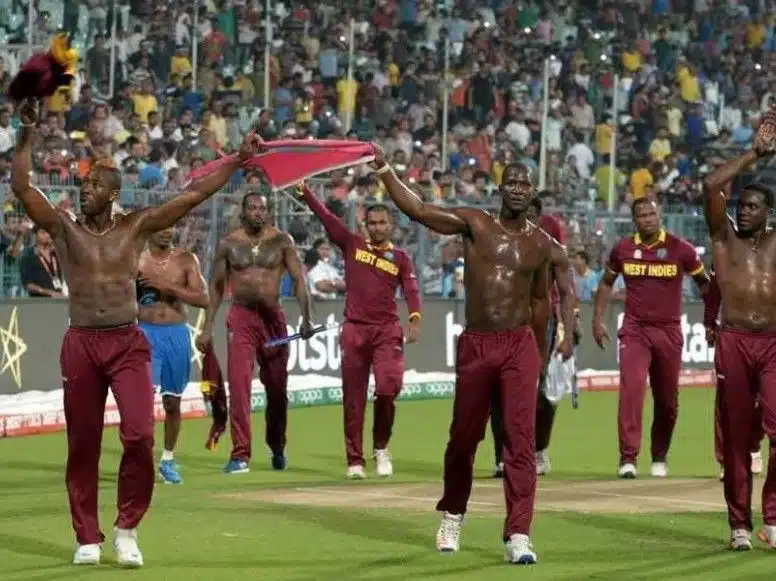
England had set 155/9, which looked enough going into the final over. West Indies needed 19 off 6 balls, and Carlos Brathwaite hit four consecutive sixes off Ben Stokes to seal victory. Brathwaite finished that innings with 34* and also took 3/23 with the ball in the same match.
Marlon Samuels made 85* off 66 balls, the highest individual score in a T20 World Cup final. Samuel Badree bowled across the tournament at an economy of just 5.39.
West Indies had earlier chased 193 against India in the semi-final, driven by Lendl Simmons’ 82* off 51 balls, with Andre Russell also contributing in that match.
Sri Lanka (2014)
Sri Lanka had lost four consecutive global white-ball finals before 2014. In Dhaka, they ended that run in style, holding India to 130/4 with just 19 runs conceded in the final four overs, then chasing 134/4 down in 17.5 overs to win their first T20 World Cup title.
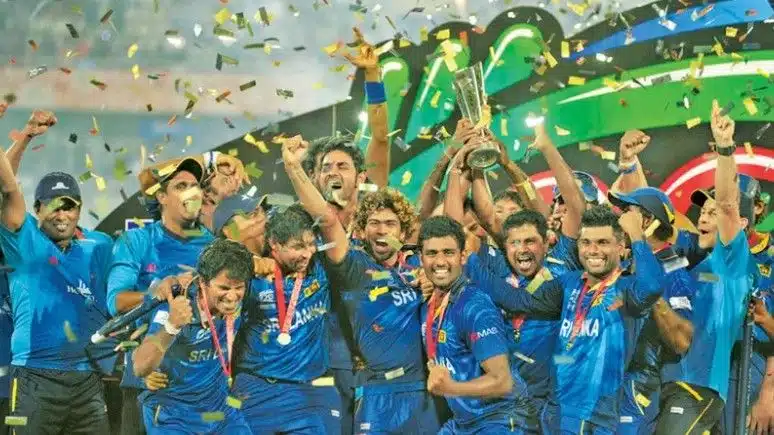
It was a title that ended a painful run of four consecutive global white-ball final losses for the island nation.
Kumar Sangakkara made 52* off 35 balls in his final T20I and won Player of the Match. Rangana Herath produced figures of 5/3 against New Zealand while defending 119, and Lasith Malinga led the pace bowling throughout.
Sri Lanka bowled the Netherlands out for 39 in the group stage and won that game with 90 balls to spare. Mahela Jayawardene scored 158 runs in the tournament and became the first batter to reach 1,000 career T20 World Cup runs. Sri Lanka beat West Indies by 27 runs via the D/L method in the semi-final.
West Indies (2012)
Sri Lanka hosted the 2012 T20 World Cup and nearly won it on home soil. West Indies had other plans. They posted 137 and then bowled the hosts out for 101, winning by 36 runs to claim their first T20 World Cup title in Colombo.
On the way to the final, they beat Australia by 74 runs in the semi-final, with Chris Gayle scoring 75* in that match, and beat England and New Zealand in the Super 8 stage, including a Super Over win over New Zealand.
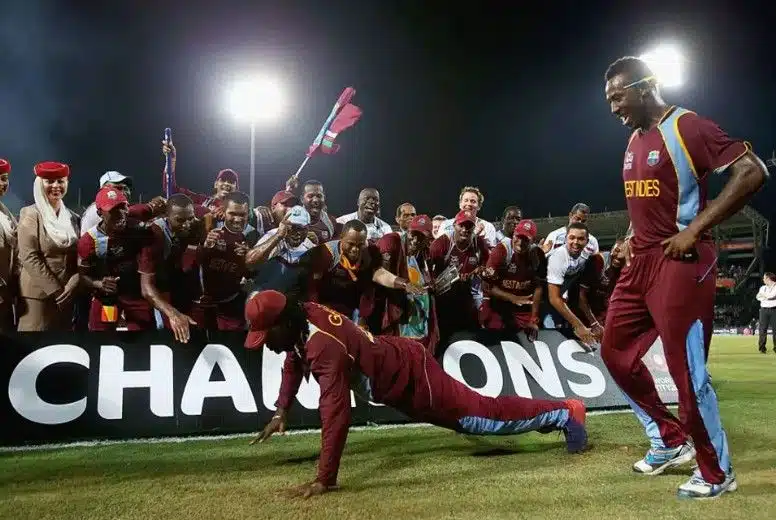
Marlon Samuels scored 230 runs across the tournament, the third-highest run tally in the event, including his match-winning 78 off 56 balls in the final. Sunil Narine took 3/9 in the title match and was a consistent force in the middle overs throughout the campaign.
England (2010)
England won their first T20 World Cup in Bridgetown, beating Australia by 7 wickets. Australia posted 147/6 and England chased 148/3 in 17 overs, finishing three overs early. It was England’s first ICC global title in any format.
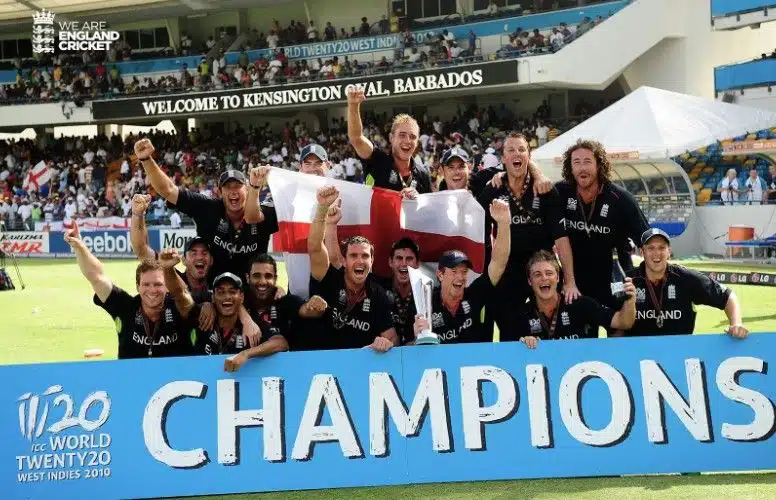
Craig Kieswetter scored 63 in the final to set up the chase. Kevin Pietersen accumulated 248 runs across the tournament at an average of 62 and was named Player of the Tournament.
Pakistan (2009)
Lord’s 2009 belonged to Pakistan. Chasing 138/6 set by Sri Lanka, they completed the chase of 139/2 in 18.4 overs. Shahid Afridi contributed with both bat and ball, scoring 54* off 40 balls and taking 1/20.
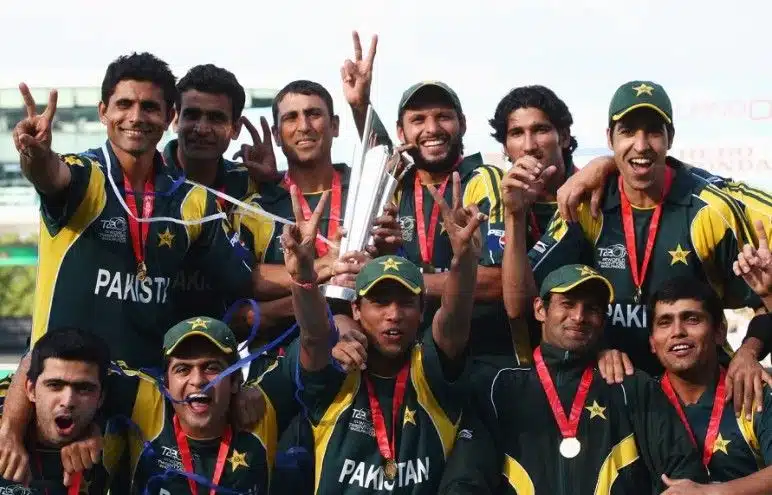
Abdul Razzaq’s 3/20 reduced Sri Lanka to 32/4 early and took the game away from them quickly.
Umar Gul was the tournament’s leading wicket-taker with 13 wickets at an average of 12.15, including 5/6 against New Zealand, the first five-wicket haul in T20I history. Saeed Ajmal added 12 wickets at an economy of 5.82 to back him up.
India (2007)
The first T20 World Cup final was held in Johannesburg, where India defended 157/5 and bowled Pakistan out for 152 in 19.3 overs, winning by 5 runs. Joginder Sharma bowled that final over, and Sreesanth took key wickets across the tournament.
Gautam Gambhir scored 227 runs across the tournament, the second-highest run tally in the event, and made 75 in the final.
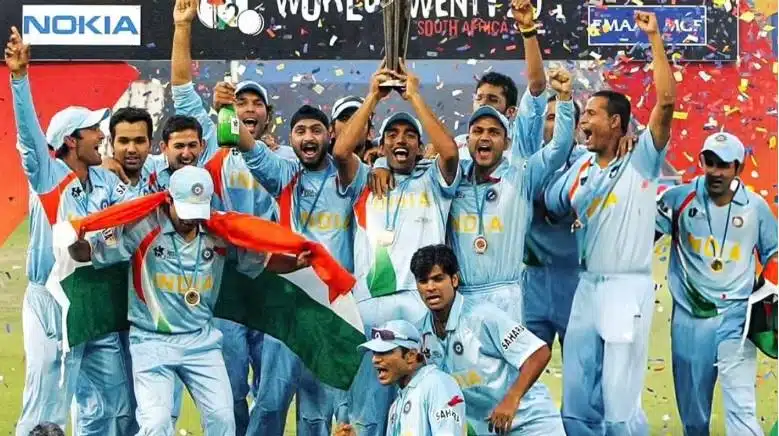
Yuvraj Singh scored 148 runs, hit six sixes in one over against England, and made 70 off 30 balls against Australia. Rohit Sharma scored a fifty against South Africa and contributed 30* in the final. Irfan Pathan took 10 wickets and was named Player of the Match in the final with 3/16. RP Singh led the bowling attack with 12 wickets at an average of 12.66, and Harbhajan Singh was a consistent wicket-taker throughout.
All-Time Tournament Records
| Record | Player | Detail |
|---|---|---|
| Most runs all-time | Virat Kohli | 1,292 runs in 35 matches |
| Most wickets all-time | Shakib Al Hasan | 50 wickets in 43 matches (2007–2024) |
| Most titles (nation) | India | 3 titles (2007, 2024, 2026) |
| Highest score in a T20 WC final | Sanju Samson | 89 off 46 balls (2026) |
| Best bowling in a T20 WC final (pace) | Jasprit Bumrah | 4/15 (2026) |
| First five-wicket haul in T20I history | Umar Gul | 5/6 vs New Zealand (2009) |
| First batter to 1,000 T20 WC runs | Mahela Jayawardene | 2014 |
| Fastest fifty in T20I history (at the time) | Yuvraj Singh | 12 balls (2007) |
Suggested Reads:
Conclusion: India Won the Most T20 World Cup Titles In 2007, 2024, And 2026
Ten editions, six champions, and one nation that stands above the rest. India leads with three titles, including the first-ever successful title defense in 2026.
West Indies and England have two titles each, while Pakistan, Sri Lanka, and Australia have one apiece. Every edition has been decided by a defining performance, a match-winning number, or a moment that rewrote the record books.
FAQs
India has won the most titles in 2007, 2024, and 2026.
India became the first team to successfully defend the T20 World Cup, winning in 2024 and 2026.
Virat Kohli leads all-time with 1,292 runs in 35 matches.
Shakib Al Hasan holds the record with 50 wickets in 43 matches between 2007 and 2024.
India posted 255/5 in the 2026 final against New Zealand in Ahmedabad.
India beat New Zealand by 96 runs in the 2026 final, the largest winning margin in any T20 World Cup final.